What is Coral?
Corals are animals that belong to the phylum Cnidaria; invertebrate animals with tentacles and stinging cells called nematocysts. This makes them closely related to other animals like jellyfish and sea anemones.
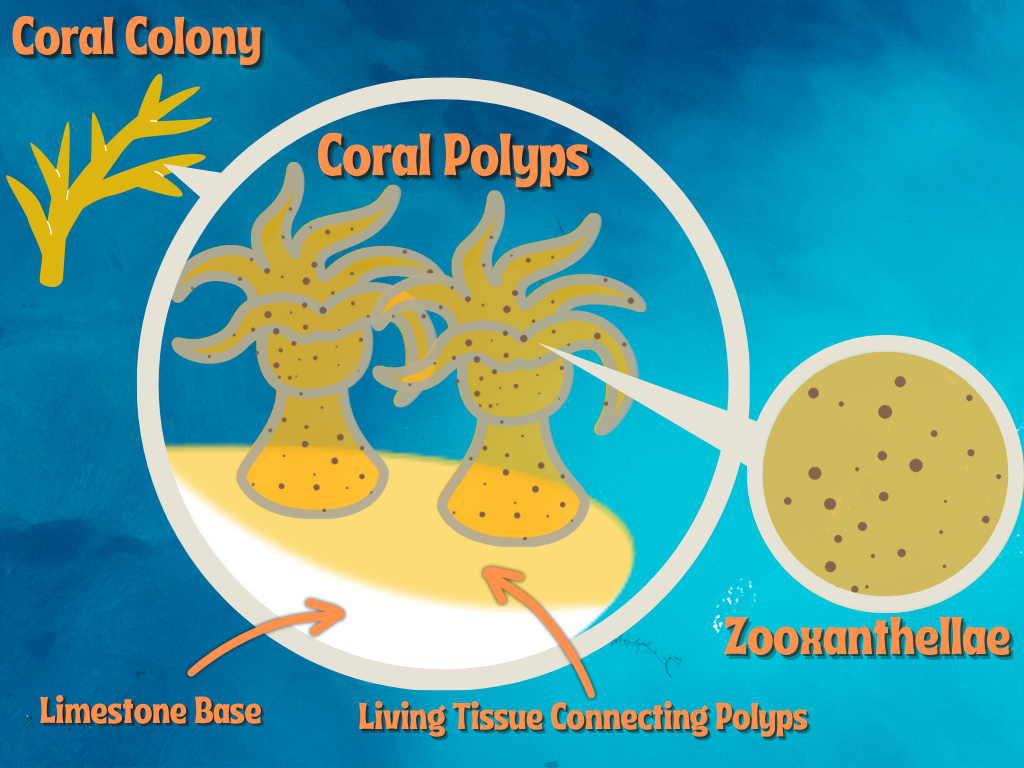
Coral reefs are made up of many coral colonies that grow in the same area. A coral colony is made up of hundreds of coral polyps, which can range in size from a pinhead to a foot in length, and are connected to each other via a living tissue. The polyps absorb calcium and carbonate ions that are dissolved in the ocean water, and and secrete it in the form of calcium carbonate, making a limestone rock skeleton or base for the polyps to sit on top of. Corals have a symbiotic relationship with zooxanthellae, a photosynthetic single-celled algae-like organism. They have a mutualistic symbiotic relationship meaning they both benefit from the relationship, helping each other survive. Corals provide a home for zooxanthellae to live in, and zooxanthellae provide corals with their color and as much as 90% of their food by taking in carbon dioxide, processing it via photosynthesis, and producing oxygen and nutrients that are then used by the polyp.
Corals get the other 10% of their food by hunting microscopic zooplankton. Their tentacles are covered in nematocysts; specialized singing cells that stay coiled beneath the surface of the tentacle. When a hair-like trigger on the outside is set off, a trap door called an operculum opens and the nematocyst shoots out like a harpoon. It spears the zooplankton, releasing venom to paralyze it so they can then use their tentacles to push the food towards their mouth found in the center of their tentacles to eat.
There are two kinds of corals: hard and soft. Hard corals (Order: Scleractinia), such as brain, star, staghorn, elkhorn, and pillar corals are slow growing, have rigid limestone exoskeletons that protect their soft bodies, and rely on their zooxanthellae as their primary food source. They are also known as ‘reef building’ corals, as their rock skeletons are the structure of the coral reefs. Soft corals (Genus: Gorgonia), such as sea fans, sea whips, and sea rods, are faster growing than hard corals, and have a more flexible skeleton, allowing them to sway with the currents. They are not reef building corals, and do not rely on zooxanthellae as their primary food source (some lack zooxanthellae completely), as they primarily hunt for their food using their nematocysts.
What is a coral reef?
Coral reefs are areas in the ocean where many coral colonies grow in the same area. Coral reefs only cover 1% of the ocean floor, but support 25% of all marine life. They are some of the most biologically diverse ecosystems on earth, rivaled only by tropical rainforests. They are home to 4,000+ species of fish, 700+ species of coral, and thousands of other kinds of plants and animals. Corals are typically found growing in shallow (<80-160ft), clean, clear, warm (~73-84 F), sunlit water. This is because the zooxanthellae need enough sunlight to photosynthesize to make the corals their food. Due to this, coral reefs are typically located in three primary regions in the tropical zone, located between 20 degrees N and 20 degrees S of the equator: the Indo-Pacific, the Western Atlantic, and the Red Sea.
Florida’s Barrier Reef
North America’s only barrier reef, and the third largest in the world, lies approximately six miles seaward of the Florida Keys in waters that are typically fifteen to thirty feet deep. The reef tract starts near Miami and extends southwest to the Dry Tortugas National Park, about seventy miles west off Key West, and patch reefs continue north through the Palm Beaches. This reef took over 10,000 years to form.
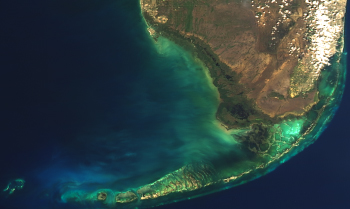
This is an image of the southern tip of Florida and the Florida Keys (a chain of islands that extends south west). The light blue line following the right side of this map is the coral barrier reef.
Why are Coral Reefs Important?
Any diver can tell you that coral reefs are beautiful. They are like undersea cities, filled with colorful fish, intricate formations and wondrous sea creatures. The importance of coral reefs, however, extends far beyond the pleasure it brings to those who explore it. Coral reefs play an essential role in everything from ecosystem and organism health to shore line protection and medical advances.
Biodiversity and Habitat
Biodiversity refers to the number of different species that live in an area. An area with high biodiversity has a wide range of life that inhabits it, and is typically a sign of a healthy, resilient ecosystem. As the foundation for complex food webs, coral reefs support an incredible diversity of organisms. Coral Reefs are known as ‘nursery areas’, meaning they are a great place for juvenile animals to grow up. There is typically plenty of food, shelter, and is harder for large predators to enter in all the cracks and crevices. Even if an organism doesn’t spend its whole life at the reef, it may go to the reef to reproduce, or be a safe place for their young grow up until they are large enough to move between other ecosystems. This is why reefs have such a diversity of life from corals, algae, and sponges, to fish of all sizes, invertebrates, reptiles, and mammals. They all may find food, habitat, and protection on the reef.
A Barrier from Storms and Surge
Reefs play an important role in protecting the shoreline from storms and surge water. Barrier reefs, such as Florida’s, were named for the way they reduce wave height by 84% and wave energy by 97%, protecting the shorelines. They are the first line of defense against erosion, serving as a natural breakwater to the land. Erosion prevention is particularly important in coastal areas such as the Florida Keys, where much of the shore is lined with residential homes and commercial buildings.
Food Source
Fish and other marine life have been a primary source of protein for as long as people have lived along the coast. From small scale artisanal fisheries to major commercial fleets, harvesting of marine life is a major economic force in all of the world’s oceans. Local fisheries, such as lobster, stone crab, snapper and grouper, all directly rely on the reef for spawning and habitat. Other fisheries, such as tuna, mahi mahi, and other pelagic species, rely on the reef indirectly, though the bait fish that they consume.
Water Filtration
Many reef inhabitants including sponges and many corals are filter feeders, which means that they consume particulate matter suspended in the water column. This contributes to enhanced quality and clarity of our near shore waters.
Economic Development
Coral reefs often form the backbone of local coastal economies. Tourists coming for reef-based recreation like boating, fishing, snorkeling, and diving need not only boats and guides, but also restaurants, hotels, and commercial and entertainment facilities. This of course has both positive and negative consequences for both the marine environment and the communities involved. In many cases, tourism associated with reefs has expanded to transform the entire economy of a region, maintaining their way of life. On the other hand, an unmonitored number of tourists may result in environmental problems such as coral damage, pollution, and inadequate waste treatment. NOAA estimates the total economic value of reef services in the U.S. is over $3.4 billion1 each year between fisheries, tourism, and coastal protection.
Medical Advances
Coral reef organisms are important sources of new medicines being developed to treat cancer, arthritis, asthma, ulcers, human bacterial infections, Alzheimer’s disease, heart disease, viruses, and other diseases. Compounds isolated from organisms living on reefs or interconnected to reef ecosystems hold vast medical potential. For example, horseshoe crab blood contains a special compound called Limulus Amebocyte Lysate (LAL), which can be used to detect bacterial endotoxins in vaccines, injectable drugs, and implantable medical devices. Similarly, other organisms have been used in medical research including: sponges and HIV treatment, cnidarians and asthma, cancer, pulmonary tuberculosis, and urinary disease treatment, Bryozoa in Alzheimer’s and cancers, mollusks in arthritis, liver disorder, and skin issues, arthropods in cancer, high cholesterol, stroke, and Parkinson’s disease, and cone snails and insulin.
Interconnectedness of Coral Reefs, Mangrove Forests, and Seagrass Beds
The health, abundance and diversity of the organisms that make up a coral reef is directly linked to the surrounding terrestrial and marine environments. Mangrove forests and seagrass beds are two of the most important facets of the greater coral reef ecosystem. Mangroves are salt-tolerant trees that grow along tropical and sub-tropical coasts. Their complex root systems help stabilize the shore line, while filtering pollutants and producing nutrients. Their submerged roots and detritus provide nursery, breeding, and feeding grounds for invertebrates, fish, birds, and other marine life. Many of the animals raised in mangroves migrate to coral reefs for food, spawning and habitat.
Seagrasses are flowering plants that often form meadows between mangrove habitats and coral reefs. They form the foundation of many food webs, providing nutrients for everything from sea urchins and snails to sea turtles and manatees. Seagrass also provides protection and shelter for commercially valuable species such as stone crabs, snappers and lobsters. Additionally, they filter the water column, prevent seabed erosion, and release oxygen essential for most marine life. The ecosystem services of mangroves and seagrass are vital to the long term health of coral reefs.
Threats to Coral Reefs
Since the 1970’s reef around the world have rapidly degraded. NOAA has estimated that nearly 90% of live corals in the Florida Keys have died in the last 40 years2. They are one of the most threatened habitats on earth. Corals are extremely slow growing, taking hundreds to thousands of years to grow an entire reef, and despite many corals’ rock-like appearance, they are very fragile and easily damaged by both direct and indirect threats. This results in them being destroyed at a rate that is faster than they can repopulate. With each reef lost, countless forms of unique tropical marine life move closer to extinction.
Physical Damage from Recreation
Did you know touching coral kills coral? As we know, coral colonies are covered in hundreds of tiny soft-bodied coral polyps. So when boats drop anchor, or hit into corals near the water surface, or swimmers, snorkelers, and divers want to take a break or adjust their gear and stand on top of a coral head, they are crushing and killing those polyps. Even if someone was to accidentally brush up on a coral colony, corals have a protective mucous layer that helps keep them from becoming infected. Touching them opens that layer up, and can even leave behind foreign oils and other germs they aren’t used to fighting off, leaving them more susceptible to disease. Polyps in a colony are connected by a living tissue that allows them to transfer nutrients between each other, but this also allows for the easy transfer of infection across a colony as well. The more traffic on a reef the greater the risk of this type of direct damage, which has been a leading cause of coral death, especially in popular dive & snorkel locations such as the Florida Keys.
Irresponsible and Destructive Fishing Practices
Destructive fishing practices, overfishing, and bycatch, are all issues that have affected reefs both directly and indirectly. Destructive fishing practices such as bottom trawling have caused massive damage to reefs worldwide. Bottom trawling, a fishing method in which a net is towed behind a boat with weights along the bottom and floats along the top, is designed to drag across the seafloor to rip everything up, directly damaging these ecosystems. Even other major fishing practices such as long lines, gill nets, and purse/seine nets result in bycatch (the unintentional catch of a non-target species), and overfishing of many species that are interconnected to reef ecosystems. When a species is overfished, too many are being removed quickly enough that their reproduction rate is not replacing those lose individuals fast enough, leading to decreased population sizes. This can lead to a domino effect of negative consequences to the food web and ecosystem as a whole.
Pollution
Pollutants that make the ocean less healthy, decreasing the health and well being of the organisms within it. A wide variety of pollutions plague our reefs including:
- Marine Debris: Marine debris just means man-made trash that has entered the ocean. It is estimated that the vast majority of trash in the ocean is plastic, with 50% of plastic in production being single-use. Plastic is a big issue because petroleum-based plastics do not truly or fully biodegrade, as bacteria are not adapted to break down these unnatural molecules. Even plastics labeled as “compostable” require a specific set of conditions to truly degrade. This means that depending on what it is made of, it can take 100’s of years to degrade, if not forever. Many animals become entangled in marine debris, or consume it, leading to the bioaccumulation of toxins in their bodies, biomagnification of toxins through the food chain, damage to internal organs, starvation, and death.
- Microplastics: When plastic breaks down, it just breaks into smaller pieces of plastic called “microplastics” defined as plastic the size of 1nm-5mm. These plastics become so small that even the smallest of organisms can consume them, such as coral polyps. Plastics can leach hazardous chemicals both added during production, like BPA, and environmental pollutants that are attracted by the plastic, like pesticides, into the body, bioaccumulating over time. This can lead to various health effects like liver damage and an increased susceptibility to getting sick, but ultimately long-term effects are unknown since this is a relatively new phenomenon being studied. Microplastics have been found in our bodies, attached to the outside of red-blood cells and in our lungs, as well as in a wide variety of things we consume, including salt, tap water, bottled water, air, seafood, honey, sugar, and rice.
- Wastewater: Wastewater is any water that has been affected by human use, such as whenever you wash your hands, flush a toilet, take a shower, manufacture goods, or stormwater (see below). Wastewater must be properly treated and cleaned, or risk polluting the environment. Municipal (domestic) wastewater management practices in Florida include septic tanks, sewage outfall pipes, and shallow-water and deep-water injection wells. Much of Florida’s bedrock is limestone, so when septic tanks crack or fail, or our wastewater is injected in shallow-water wells, the wastewater is able to easily move through this porous rock and back into our waterways. Unfortunately, there is no perfect solution to wastewater treatment, and it is commonly mismanaged, resulting in this contaminated water polluting the environment, leading to disease, Harmful Algal Blooms (HABs), dead-zones, and more.
- Stormwater: Stormwater runoff is the water that washes across the land until it is deposited into the ocean, picking up pollutants along the way. It can run directly off the land into the ocean or via storm drains. Different pollutants, from oils, pesticides, fertilizers, pet waste, and even trash, can all be collected in stormwater runoff and deposited into the ocean.
- Sunscreen: In more recent years, sunscreens containing common chemical UV filters like Oxybenzone and Octinoxate have been recognized to have negative effects on corals including disrupting reproduction, cause coral bleaching, and damaging coral DNA. To learn more about sunscreen and their effect on corals see our Understanding Sunscreen page.
- Sedimentation: Sedimentation from coastal development, dredging waterways, and runoff can smother corals, inhibiting their ability to feed, grow, and reproduce.
Disease
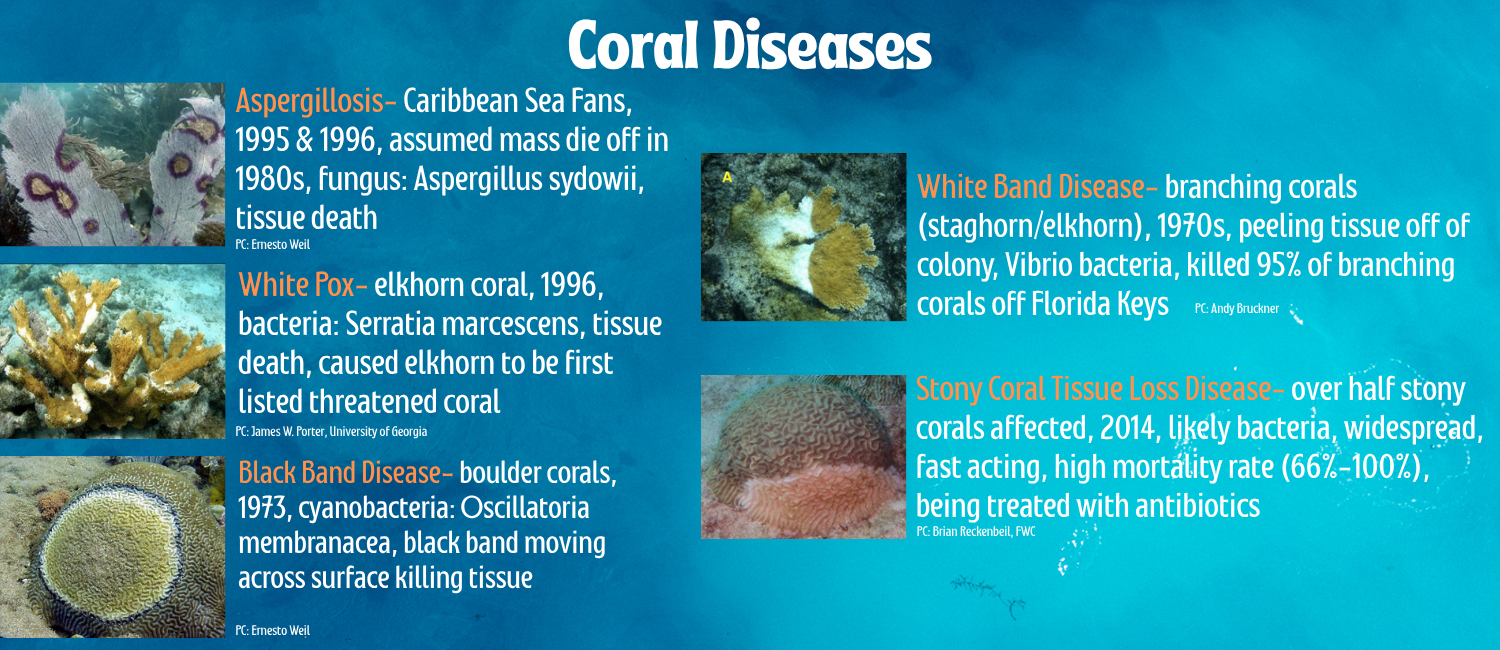
Oftentimes coral diseases causes by a variety of pathogens including bacteria, fungus, parasites, and viruses, are caused by or made worse by anthropogenic influences such as pollution and climate change. Some coral diseases found in the Florida Keys over the past decades include Aspergillosis, White Pox, Black Band, White Band, and most recently Stony Coral Tissue Loss Disease (SCTLD).
Climate Change
Climate change is a change in global or regional climate patterns, in particular a change apparent from the mid to late 20th century onwards, attributed largely to the increased levels of atmospheric carbon dioxide produced by the use of fossil fuels. When we burn fossil fuels like oil, coal, and gas to create energy to do things like drive our cars and turn on our lights or even make plastic, we release greenhouse gasses (carbon dioxide, methane, nitrous oxide, water vapor) into the atmosphere. These gasses do not just float away into space but become trapped in our atmosphere leading to the greenhouse effect. When sunlight enters our atmosphere, some energy is reflected back into space and some is absorbed and reradiated as heat. These gasses trapped in the atmosphere act like the glass of a greenhouse, allowing sunlight to enter, but trapping the radiant heat inside leading to a wide variety of negative effects. Climate change affects reefs by driving an increase in the frequency and intensity of coral bleaching events that kill corals and ocean acidification impacting corals’ ability to build and maintain their limestone skeletons.
How to Help Coral Reefs
Reefs are very important yet fragile ecosystems that face many threats. Luckily, there are many ways we can help them:
Reduce Physical Damage: The use of mooring buoys have greatly reduced anchor damage at reef sites, as well as the education of snorkelers and SCUBA divers to not touch or stand on the coral.
Support Sustainable Fishing: When you can, get your seafood from a more sustainable source that does not overfish, has methods to reduce bycatch, or uses less destructive fishing practices. The Monterey Bay Aquarium Seafood Watchlist is a great resource to check out to help guide you in how to do this.
Reduce, Reuse, Recycle, Refuse: An estimated 50% of plastic in production is single-use. It does not make sense to make an item you use once and throw away out of a material that never goes away. The best way to prevent trash from entering the ocean is to not create it in the first place. Reduce the amount of single-use plastic you use, find reusable alternatives, recycle what you can, and refuse when it’s not needed. It is also important to know what is and is not recyclable in your region and to not put something that is not recyclable in the recycling bin, for contaminated loads of recycling are commonly trashed. One small act repeated by billions of people everyday can all go a long way in reducing ocean waste.
Clean Up Trash: When you do see trash in the environment, pick it up! Use gloves or grabbers to ensure your safety. You can also support organizations like The Ocean Cleanup that work to remove debris from our oceans, and even come up with other innovative solutions to clean up marine debris!
Improve Water Quality: Anything you can do to reduce the various pollutants entering the ocean helps coral reefs. Reduce pollutants on land to help with stormwater runoff. Reduce the use of lawn chemicals/pesticides/fertilizers, or at the very least not applying them at a time it is expected to rain, permitted storm drain stenciling, picking up your pet waste, do not dump anything down storm drains, properly dispose of household waste, advocate for proper wastewater treatment methods in your area, or use ocean-friendly sunscreen or alternative sun protection methods.
Reduce Carbon Footprint: Reduce the amount of greenhouse gasses you burn each day to help curb the effects of climate change. You can do this by simple methods like reducing the amount of energy you use by turning off the lights when you’re not in the room, walk, carpool, and ride your bike when you can, or reduce your plastic usage. You can also make your home more energy efficient, or get your energy from a renewable source like solar or wind if possible.
Educate Others: One of the easiest things you can do to help reefs no matter where you are is to teach others what you know! The more people that know all the wonderful benefits reefs provide us and why they should care about them, the threats they face, and how to protect them, the more people there will be helping them and the better off they’ll be.
Remember all the incredible benefits having healthy reefs in the world provide us all, even if you don’t live near them. When reefs face extinction, we face losing all they provide us from our food to medication and disease treatment, storm protection, economic support, and the all around beauty, life, and enjoyment we gain from them. Coral reefs are a critical habitat that are more threatened now than they have ever been, making it all the more important to preserve and protect the reefs we have left.
For more tips, visit:
Tips for Divers and Snorkelers
Tips for Boaters and Fisherman